Creative direction: turn a reference into a shootable idea
When you share a reference, say what you like about it. It could be the product shot, the movement or the layout. Then explain how you'd use that idea for your own product.
Check the camera view against the message
Use the original camera-angle planning model to compare what a view reveals and hides before recording the real product.
Creative direction tells the team what the ad needs to explain and how to show it. We’ll take a product from references to a shot plan so you can see the decisions behind each frame.
Turn a feeling into something the camera can capture
‘Premium’ or ‘energetic’ can mean different things to a producer, editor and client. Translate the feeling into a visible instruction: what fills the frame, how the product moves, where the light falls and what the viewer should notice.
Use the reference as a conversation about those choices. TRG’s production workflow puts mood-board alignment before set building and styling. That is a useful place to resolve disagreements while the direction is still inexpensive to change.
Try it in your next brief
Choose 1 reference and write a capture instruction without using an aesthetic adjective. Name the subject, view, action and relevant detail. Ask the next person to sketch the frame from that sentence. The gaps reveal what your direction still needs.
Further reading: TRG’s mood-board workflow
Give each reference a job
Bellroy shows the bag open so you can see the compartments. In the case snippet, hands show how the product moves. Buck Mason gets closer to show the fabric and fastening. Use those choices to discuss your own shots. The references don’t tell us who was targeted or how the ads performed.
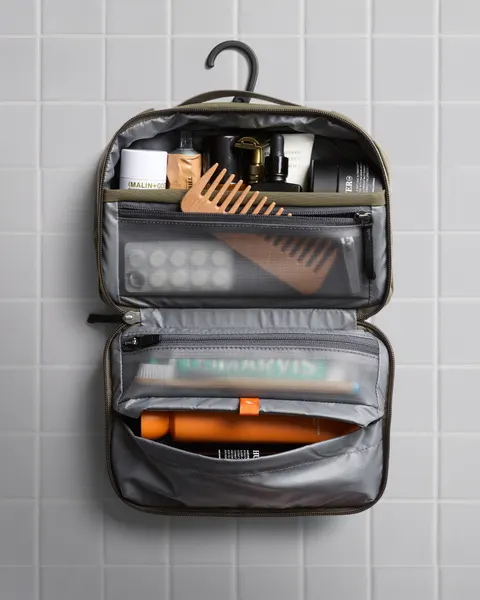
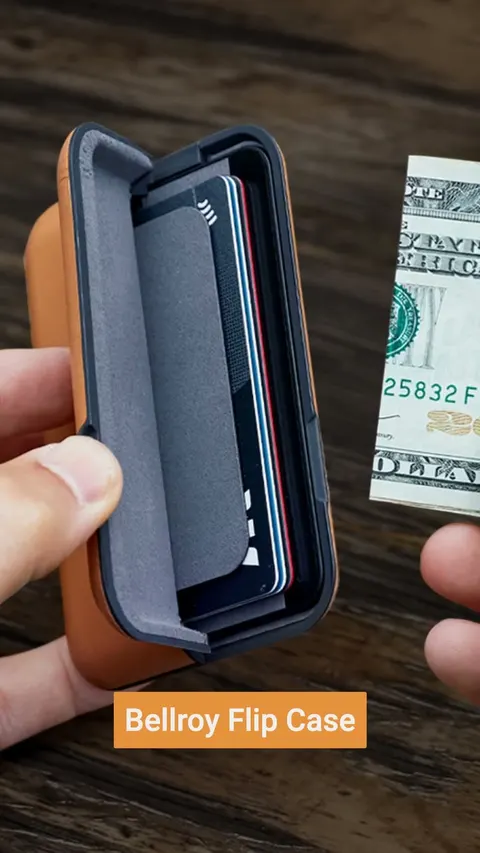
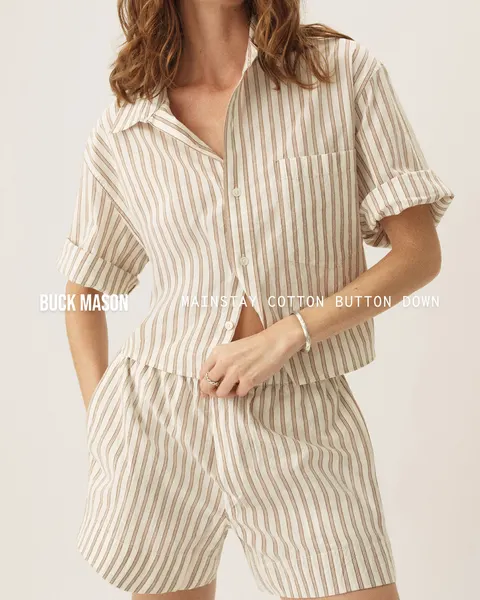
- Keep
- Whole product layout, readable mechanism and a close detail only when it explains construction.
- Leave behind
- Advertiser branding, footage, unverified claims, unrelated styling and any assumption that these are winning ads.
- Our direction
- Show where the 3 travel items go, then show someone taking 1 out. Use the same items throughout.
Complete the assignment before the shoot
pouch brief: a travel pouch with 3 compartments, a zip opening and a hanging loop. These are authored design assumptions, not facts about a product for sale. No campaign or customer study has run.
- Customer question
- Can I see where my travel essentials go? This audience situation is a planning hypothesis, not customer research.
- Desired understanding
- Someone watching should be able to point out the 3 compartments and explain how to take an item out.
- Concept
- Show the cable, bottle and comb going into the pouch, then take 1 item out.
- Proposed message
- Your travel essentials, in view. Make the words true in the shot rather than adding a general capacity or speed claim.
- Visual rules
- Start with the layout, keep construction intact, maintain item continuity and show access without a cut concealing a step.
- Production constraints
- Use original footage of the real approved sample when adapting. Confirm construction, item sizes, caption readability, sound rights and the final destination before export.
Direction explains how we want to show the idea. The concept gives us a story to film. Framing, lighting, editing and type turn that plan into the finished ad.
6 frames with a timed script
These are our planning sketches for the pouch. The 6 frames add up to 15 seconds. Read the lines aloud and rehearse the actions before filming. The planned timing may need to change.
Proposed line: 3 essentials. One place.
Proposed line: A place for each.
Proposed line: [No extra spoken line]
Proposed line: Open it. Find what you need.
Proposed line: Your travel essentials, in view.
Proposed line: See the layout.
Make critique change the assignment
- Before
- A styled closed-pouch opening, then a jump cut to a packed product. The line says Find what you need, but the actual access step is missing.
- After
- Open with the complete layout, pack the same named items, then show the real retrieval continuously. The edit now supplies the action the line describes.
- Why
- The edit now shows what the line promises. We still don’t know whether it will perform better.
- One-variable follow-up
- To test the opening, compare the pouch closed with the pouch open in the first 2 seconds. Keep the rest of the footage, words, offer and destination the same, and set up the experiment before judging the result.
Hand off decisions, not a mood
- Director: owns the explanation, framing and action continuity.
- Producer: supplies the approved sample, named items, location and rights-cleared talent/sound.
- Editor: aligns speech, captions and action. Checks actual phone-size readability and sound-off understanding.
- Product approver: verifies construction, fit, claims and product/version continuity.
- Buyer: checks current placement specifications, objective, destination and experiment configuration. The creative brief does not create or manage an ad account.
What is a storyteller in an advertising team?
A storyteller tells or writes stories. The dictionary meaning is broad; in an advertising team, the useful responsibility is arranging a specific situation, action and consequence so the viewer can follow the idea. It may be carried out by a writer, director, creator or editor. The title does not establish who researched the claim, filmed the work or approved publication.
For our product, a simple story could begin with someone needing a charger at a station, show the actual pocket being opened, and end with the cable retrieved. The sequence gives the action a reason. It does not need an invented customer, a dramatic testimonial or an unsupported promise that the product always saves time.
Ask what changes between the opening and ending, what the camera must show to make that change understandable, and which words explain something the image cannot. A continuous product demonstration can be enough. Do not add an emotional backstory the person cannot truthfully describe or present a staged situation as a real customer account.
Use the direction plan below to assign the pictures, actions and review owners. This is an application of storytelling to ads, not a complete literature course, dictionary entry or description of every professional storyteller.
Take the working document with you
Start with the blank worksheet, or read the filled-in example to see how to use it. You can copy either one.