Brand strategy that changes the next ad
Get clear on who the product is for and why they'd choose it. Use that to decide what your ads should say and show.
Choose a promise you can show
pouch brief: a travel pouch with 3 compartments, a zip opening and a hanging loop. These are authored design assumptions, not facts about a product for sale. No campaign or customer study has run.
- Audience situation
- Someone packing a few travel essentials. That’s the situation we’re using for this exercise, not a finding from customer research.
- Problem to investigate
- People may be unsure where each item fits and how to reach it. Confirm this with real customer evidence before treating it as a market fact.
- Positioning choice
- Make the compartment layout understandable. This is our proposed focus, not a claim that it is unique among competitors.
- Proposed promise
- Your travel essentials, in view. The production needs to show the same named cable, bottle and comb through packing and retrieval.
- Proof boundary
- Construction and item fit must be verified on the real sample. Do not claim fastest access, universal capacity, customer endorsement or a performance lift.
- Next research
- Ask people to describe the layout after viewing the explanation. Record the actual method, sample and responses before drawing a conclusion.
Brand strategy decides who you’re trying to reach, what you want them to remember and why they should believe you. Your ads need to show those choices. We’ll work through a product to make that practical.
Separate strategy, identity and guidelines
- Strategy
- Who you’re trying to reach, what you’re promising and what you can prove. Here, show someone packing the named essentials where each item goes.
- Identity
- The expression of that choice: direct language, clear product views and labels that name the object or action. A new logo or palette alone would not supply the strategy.
- Guidelines
- The repeatable production rules: keep the whole layout visible, preserve the same items and use only approved claims. The separate guideline resource makes these reviewable.
- Brief
- The specific assignment: a 15-second packing-to-access sequence, owners, shots, proposed lines, evidence checks and a destination.
Your team may use different names for these documents. What matters is knowing which decision each one makes and who needs to make it.
Observe references without inventing a brand strategy
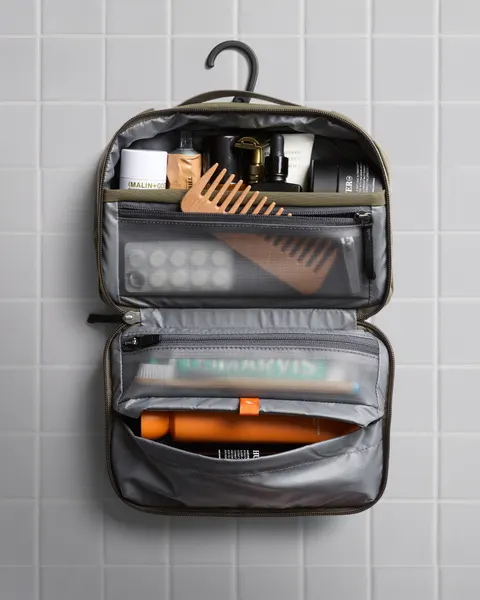
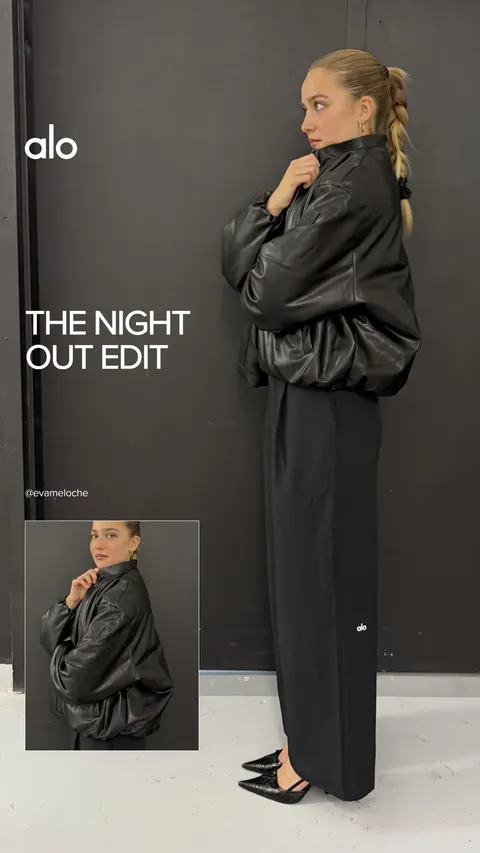
Bellroy shows the compartments with the bag open. Alo pairs a full outfit with a smaller inset and an occasion line. One explains the product layout, while the other gives the outfit a setting. The images don’t tell us the brands’ strategy, audience research or results.
- For our case
- Choose an open-layout demonstration because the authored customer question concerns organization. Keep styling secondary to seeing where things go.
- If the question changes
- A different customer question may call for a different idea. If you’re selling a reason to wear an outfit, an occasion may matter more than a close-up of its construction. Explain why you chose the reference.
Trace the strategy into creative decisions
- Message
- Name the use and visible layout. Avoid unsupported superiority.
- Visual proof
- Show the same 3 items, the compartments and one genuine access action.
- Format
- Use a whole-layout static view for spatial explanation or continuous video for the mechanism. This is a production rationale, not a performance ranking.
- Voice
- Concrete verbs: pack, open, find. Do not invent a customer quotation to sound persuasive.
- Destination
- Show the same product version, pictured items and approved promise on the landing page.
- Measurement
- Check whether people understand the explanation separately from how the ad performs. A good-looking board and brief won’t tell you how many people will buy.
Run a message-consistency review
- Read the proposed line without the image. State exactly what a reasonable person would expect.
- Watch the original demonstration. Mark which parts of that expectation the footage supports.
- Check the real product/version and destination. Resolve any construction, capacity, offer or disclosure mismatch.
- Record assumptions separately from evidence. Assign an owner to every unresolved claim.
- Carry the choices into a specific brief and practical guidelines. Do not let a mood board substitute for decisions.
Take the working document with you
Start with the blank worksheet, or read the filled-in example to see how to use it. You can copy either one.