AI marketing tools and platforms: choose by the work
Start with the output your team needs, the facts it must preserve and the actions it may take. The AI label alone cannot tell you whether a platform fits.
Choose AI marketing tools by the decision they support
A useful comparison starts with one real brief. Choose the output first, then ask which input the tool needs and how you will check its work. An ad reference, a draft and a campaign report answer different questions.
- Research a visible approach
- Use our format filters and visual search to find references. Inspect the source creative and record what you can actually see. Your output is a shortlist with reasons, not a claim about winners.
- Draft an asset
- HubSpot describes Campaign Assistant as a tool for landing-page, email and advertising copy. Supply approved product facts and a planned campaign; review every proposed claim and the final wording.
- Deliver a campaign
- Google describes Performance Max as combining supplied assets, settings and Google AI across its inventory. Check conversion goals, tracking and budget before granting publishing access.
- Evaluate the result
- Use your own account reporting and a defined experiment. Record attribution, spend, conversions and the decision rule. A competitor reference cannot supply those results.
For a small team, begin with the task that is blocking the next approved piece of work. Run the same brief through shortlisted tools, record corrections and count the time needed to produce an acceptable output. We have not run a comparative vendor benchmark or tested these vendor accounts.
How we use AI for creative research
We use advanced AI models to analyze and categorize individual ad creatives, with a focus on visual accuracy. Our Infinity Board organizes references using creative-format labels, alongside brand and industry filters. Our visual search matches a description to visual content so you can explore relevant references.
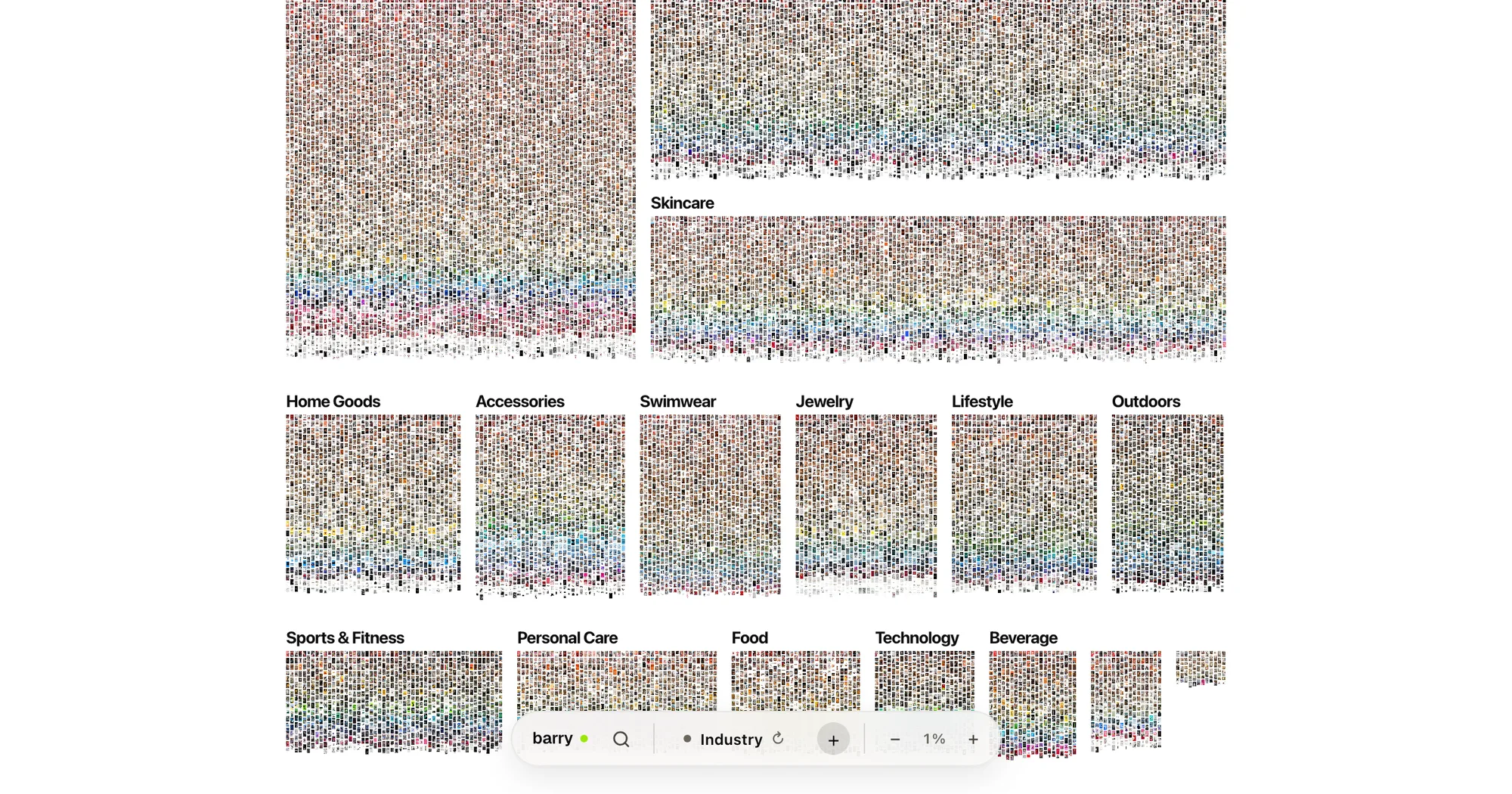
Use a format label to narrow the set, then inspect the actual creative. A label can be wrong. For video classification, our process samples still frames; this does not establish the complete sequence or spoken words. A visual match is a research lead, not evidence that an ad is effective.
You still decide what the ad means for your brief. We do not automatically identify its messaging theme or setting, transcribe its speech, generate your ads or report their performance. Keep your own interpretation and campaign data beside the reference.
A reference and a generated output are different evidence
These real retained snippets show product actions. They do not demonstrate any AI product, identify its training data or establish campaign performance. The brief below uses a separate product.

Check the product action
The Blueland snippet shows tablet handling, dropping, fizzing, brushing and flushing.
What to look for: Can a reviewer follow the actual steps?
Try this: For your own assignment, compare an assisted output with the real sample and required action. Do not substitute a plausible-looking construction.

Keep the product identifiable
The David snippet moves from boxes and packaging to the bar and a person tasting it.
What to look for: Which views let the reviewer identify the product?
Try this: Check package and product continuity in your own output. This snippet does not verify taste, a generated asset or sales.
Choose the workflow before comparing the AI label
An AI-powered marketing platform is software that uses AI within one or more marketing tasks. The category can include research, asset generation, analysis, customer-data workflows and coordinated actions across tools. Those tasks need different inputs and controls. A product describing itself as an all-in-one platform does not prove that it covers your workflow, understands your product or improves your results.
Write the job as an input and an output: ‘turn these approved product photographs and facts into three reviewable layouts,’ or ‘summarize our own creative results with links to the source records.’ The first needs faithful asset creation; the second needs access to compatible reporting. Neither is the same as finding competitor references for a brief.
Keep a manual example of the job. It gives the team a baseline for checking correctness, time and rework. If the manual brief cannot say which product feature is real or which metric matters, adding AI can produce more unresolved material rather than a clearer assignment.
Five kinds of work to keep separate
Reference research collects and explains examples. Generation produces new text, images, layouts or video from supplied material. Creative analytics connects assets with your account’s reporting. Customer marketing uses customer data and workflows across the customer journey. Asset operations manages the files, versions, permissions and approvals needed to deliver work.
A single product may describe several of these functions, but check each separately. A realistic product image does not establish accurate financial reporting. A useful report does not establish permission to publish an ad. An easy export does not establish that you can license every asset inside it.
Motion: distinguish creative analytics from the productivity app
Motion at motionapp.com describes AI-assisted creative analytics for advertising teams. Its public page presents work such as understanding creative performance and deciding what ads to make next. These are vendor descriptions, not an account trial or an independent assessment of prediction quality. If your question concerns your own ads, ask what account data and attribution definitions the analysis uses.
Motion at usemotion.com is a separate productivity product whose site describes projects, tasks, calendar and other work tools. The phrase ‘motion app’ can refer to that product. This advertising guide does not provide either application or compare every productivity feature. Follow the correct official site for access.
Runneth: review the proposed action as well as the draft
Runneth’s public site describes a marketing agent working across research, concepting, static creative, creator feedback, naming, launching and reporting. Its examples include illustrative workflow states, so a demonstration of publishing should not be repeated as proof that those particular ads were launched by the product. We have not connected an account, run an agent or checked a campaign result.
For an evaluation, separate a draft from an action. A proposed brief can be reviewed before anybody uses it. Sending feedback, changing an account or launching an ad needs the appropriate authority and a clear record of what happened. Ask which tools and data it can access, who reviews each action and how to inspect the result. These are evaluation questions, not claims about controls we have tested inside Runneth.
Generation, customer workflows and files need different checks
AdCreative.ai’s site describes generating advertising assets and offers analysis/scoring functions. For a generation task, check the exact product, approved words, editability and export rights. A model score is not a measured campaign outcome. Our separate AdCreative.ai comparison follows the input and review questions in more detail.
HubSpot’s current AI page presents Agent Hub for agents across marketing, sales and service, using prompts, knowledge and CRM data. For customer-data work, the question is which records and permissions a workflow uses and whether an output can be traced to those records. A public product description does not establish what your own subscription or data setup allows.
Air describes asset management, creative operations and AI design/editing. For file handoff, inspect whether the next person can find the correct approved version and understand usage restrictions. Do not treat storage, generation and advertising analysis as interchangeable just because all appear in the broader marketing technology category.
These selected products illustrate different jobs. They are not a ranked market census, a pricing comparison or a claim that every feature is available on every plan. We checked public descriptions on October 18, 2026 and did not open trials or authorize charges.
Worked example: evaluate one product-ad assignment
Brief. A team wants to explain where a cable, comb and bottle go in a three-compartment pouch. No real product, customer study or campaign results are supplied. The task is to prepare a reviewable static ad and a short demonstration plan using the real sample once one is supplied.
The source pack should contain cleared product photographs, actual compartment details, brand rules, the destination and approved words. The creative assignment is a whole open-layout view, one specific explanatory line and a next step that leads to the product details. Leave out claims about speed, travel security or sales because none has been substantiated.
Reference research can help choose how to show the layout. If a generator is used, compare its output with the actual sample: are there still three compartments, are the fastenings correct, and did the text invent a benefit? If analytics is used later, require the actual asset ID, reporting period and metric definitions. An invented planning exercise has no performance report to analyze.
Record the manual baseline and any assisted output separately. Count corrections, missing evidence and review time. Then decide whether the workflow produced a usable handoff. Do not call an attractive generated image a successful marketing test before an approved campaign has run and its results have been interpreted.
A checklist for a useful platform evaluation
Ask these questions using one assignment your team is allowed to share. Start with the minimum data needed and verify the actual plan terms before a paid evaluation.
- Task: what input must become what usable output?
- Evidence: can you locate the source facts, creative and account records?
- Access: which data, tools and publishing actions are required?
- Review: who checks product accuracy, customer claims, rights and final files?
- Output: can the next person edit, export and identify the approved version?
- Cost: what subscription, credit, storage or usage charge applies to this exact job?
- Result: what did you actually observe, how much rework remained and what is still unknown?
Make the evaluation concrete
Replace our labeled practice inputs with your own approved assignment. Notes stay in this tab; editing does not connect an account, run AI or publish an ad.
Write your own observations and production assignment. These notes stay in this tab. Refreshing removes your edits. Copy or download a file to keep them. We do not send these notes to a service.
The notes can be read and selected without JavaScript. Enable it to keep edits in this tab and use the copy and download buttons.
Keep the brief beside the evidence
We help with ad references and the original production assignment. Selected public product descriptions above were checked October 18, 2026. We have not tested vendor accounts, prediction quality, generated outputs or campaign results.