Hook writer: study real opening examples
Choose a product idea and plan how the ad starts. Use the references to work out what people will see and hear in your opening.
Observed opening examples
We chose these 4 references to show different ways to open an ad, with each creative ID counted once. The selection does not tell us which hooks are most common or perform best.
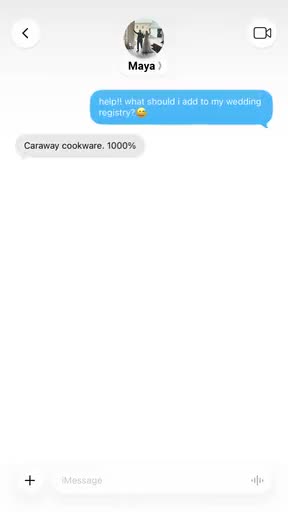
An on-screen question
Observed: The visible message asks “what should i add to my wedding registry”. A cookware-recommendation message follows in the same conversation layout.
Structure: The question gives the product a reason to appear: someone needs registry ideas. The messages that follow can answer that question instead of opening with a product and no context.
Evidence limit: This is advertiser-presented messaging, not a verified customer conversation. The silent preview does not establish spoken words. A displayed recommendation is not independent product evidence.
For your own brief: Start with a question your customer actually has. Write the answer you can show, then use that to plan your opening.
Reference ID: 1657691065512714
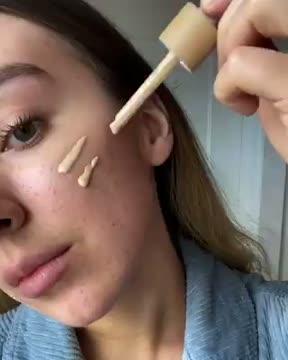
An application already in progress
Observed: A dropper applies the product to a cheek, followed by blending and face shots. The application gets things moving before an explanation. We haven’t transcribed a spoken opening.
Structure: You see the application straight away. The rest of the ad still needs to show what the product is and how it’s used. The longer reviewed sequence ends with product, shopping and website cues.
Evidence limit: Visible application is not proof of wear, protection or skin benefits. The short preview does not contain the complete closing card, and the later card is documented from the retained sequence.
For your own brief: Open with an action you can film clearly. Add a shot that identifies the product, then explain it using approved product facts.
Reference ID: 211456610188921
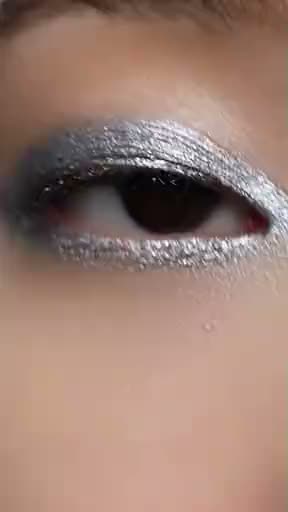
A finished look before the technique
Observed: A close view of a silver-lined eye opens the film. Product/shade text, a bare-eye view and pencil detail lead into application in the retained sequence.
Structure: The finished look gives you something to follow: how did they make it? The bare-eye view, pencil detail and application then show the process. Keep that connection in your own edit.
Evidence limit: An edited finish is not a controlled efficacy result. Keep lighting, preparation and edits in the review notes. Do not promise that another person will achieve the same result.
For your own brief: Show the finished look, then film the product and steps used to create it. Give the editor enough detail to connect the application to the finish.
Reference ID: 1592263095245001
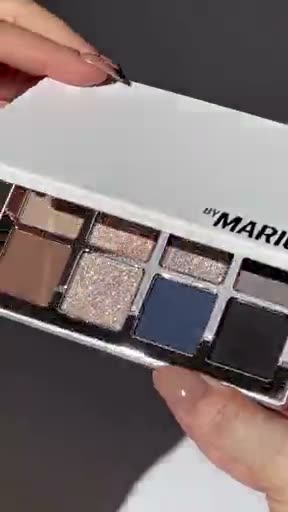
A palette reveal before product detail
Observed: A hand lifts the branded palette lid. The visible pans and changing reflections become the subject of the following close views.
Structure: Opening the palette gives people a first look inside. The following close-ups show the colors and surface detail. You’d need separate application footage to show how it looks on skin.
Evidence limit: Reflections depend on camera and light. The preview cannot establish shade accuracy on another screen or a wear result, and no spoken opening is verified.
For your own brief: What would people want to see when your product opens? Film that reveal, then add an application shot if they still need to see it in use.
Reference ID: 1466002378612966
Borrow the question, make your own sequence
Take the idea behind the opening, then make it work for your product. If you start with a question, show the answer. If you start with a finished look, show how it’s made. You’ll need your own test to find out whether the opening works.
Brief: a travel bag with an inside zip pocket. Ask where a small charger goes, then film the charger entering that pocket and the zip closing in 1 continuous shot. Proposed words: “Where can a small charger go?” We wrote this example. It is not an advertiser quote. Check the real product before filming. The example makes no claim about capacity or airline approval.
Write what comes after the hook. Show the product, follow through on the opening and finish with a relevant next step. Compare your own versions before calling one a winner.
Look at what the opening actually shows, what question it creates and what the next shot must explain. Use the examples to write an original assignment for your own product.
Write an original opening from your evidence
Use the worksheet to note what you like about an opening and what you’d film for your own product. Keep the source and shot direction beside your notes.
Write your own observations and production assignment. These notes stay in this tab. Refreshing removes your edits. Copy or download a file to keep them. We do not send these notes to a service.
The notes can be read and selected without JavaScript. Enable it to keep edits in this tab and use the copy and download buttons.
Sources and review method
We wrote these notes and briefs from the reference files. The previews here are short and silent. When a note uses a longer video, we say so in the caption. Our suggestions for your own ad are separate from what the advertiser made.
We added these review notes on . That isn’t the date the ad ran or the file was collected. We don’t have the full spoken script, targeting, spend or results unless a source below provides them. A public ad also doesn’t give you permission to reuse it.
Use the IDs below to look up the references in the Meta Ad Library. We haven’t rechecked whether each live record is still available or matches the file shown here. A Meta library ID doesn’t confirm TikTok placement. You can still study the previews on this page.