Vintage ad examples: read the idea behind the layout
Look past the lettering and study how the ad sells the product. These dated examples show different ways to introduce the idea and explain the offer.
What is the oldest ad? Start with the claim
We haven’t established the world’s oldest advertisement. The answer depends on what counts as advertising, which objects survive and whether the claim concerns a place, language or printing method. The 1920s and 1930s examples below are much later references.
One documented early British printed example is William Caxton’s advertisement for the Sarum Ordinal, dated about 1477. The Bodleian’s advertising exhibition describes it as arguably the first poster and the first British printed advertisement. Keep that British-printed scope and the approximate date. It does not show that advertising began in Britain or establish the first advertisement worldwide.
De Montfort University’s Caxton and Beyond catalogue identifies the item as an advertisement for Sarum Pie, or Ordinale ad usum Sarum, dates it to about 1477 and records surviving copies. Those are collection and bibliographic facts. They do not tell us the notice’s reach, response or sales.
These 6 print ads show different ways to introduce a product, explain its use and give the reader a next step. Pick a choice you could use in your own brief. Their age, prices and claims don’t tell us how the ads performed.
Read the surviving source before adapting the idea
Record the collection, object title, approximate date, place and medium. Then write the exact historical claim the source supports. A surviving notice can show what was offered and what the reader was asked to do. Its survival does not prove that it was the earliest example of every kind of advertising.
- Identify the offer in the actual source.
- Find the action it asks the reader to take.
- Separate a visible feature from your modern interpretation.
- Describe a communication choice you could try with your own product.
- Keep unsupported dates, translations and results out of the brief.
For an original practice assignment, name what a product offers, show the refill action and direct the viewer to the product details. This is a proposed modern exercise, not an adaptation we produced or evidence of Caxton’s performance. The product owner must supply the real instructions before filming.
Both historical sources were checked October 18, 2026. We link to the institutions instead of reproducing a Caxton image here. An old object does not by itself establish the rights to a particular digitized photograph. The 6 later whole scans retain their separate source and reproduction notes below.
The 1920s and 1930s source examples
Each source image is retained in full, including its scan margins. Open the readable scan to inspect smaller copy. The publication date belongs to the source issue. Dates inside a testimonial letter are recorded separately.
1920s advertisements
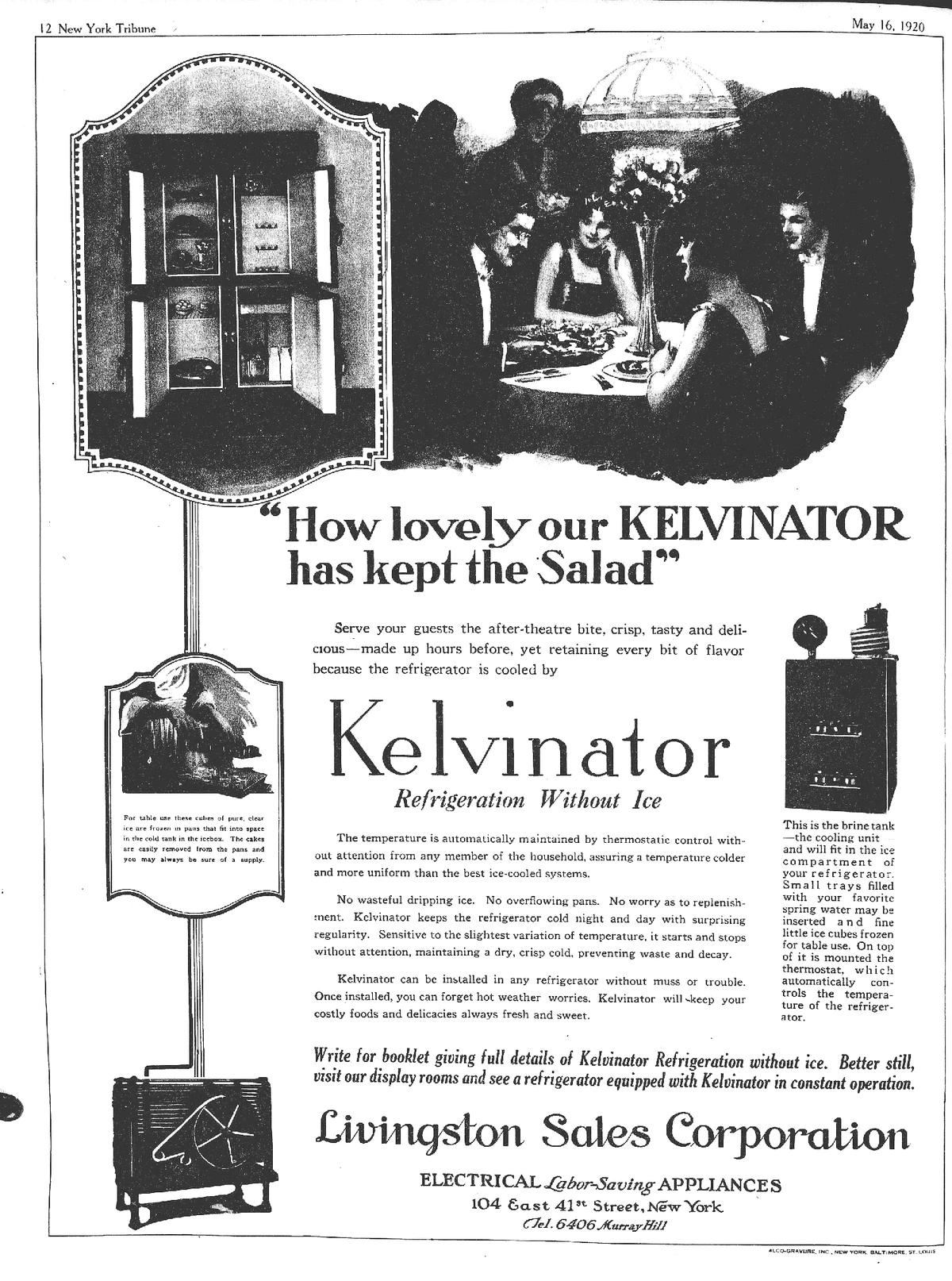
Kelvinator
May 16, 1920. New-York Tribune. Date visible in the newspaper header
Visible choice. The product is placed inside a household explanation. The illustration makes the refrigerator concrete before the body copy expands the argument.
Briefing question. Choose one everyday situation for your own product. Show the product in that situation before adding a claim.
Claim boundary. The refrigerator claims and period prices belong to this historical advertisement. This page has no sales or test results for it.
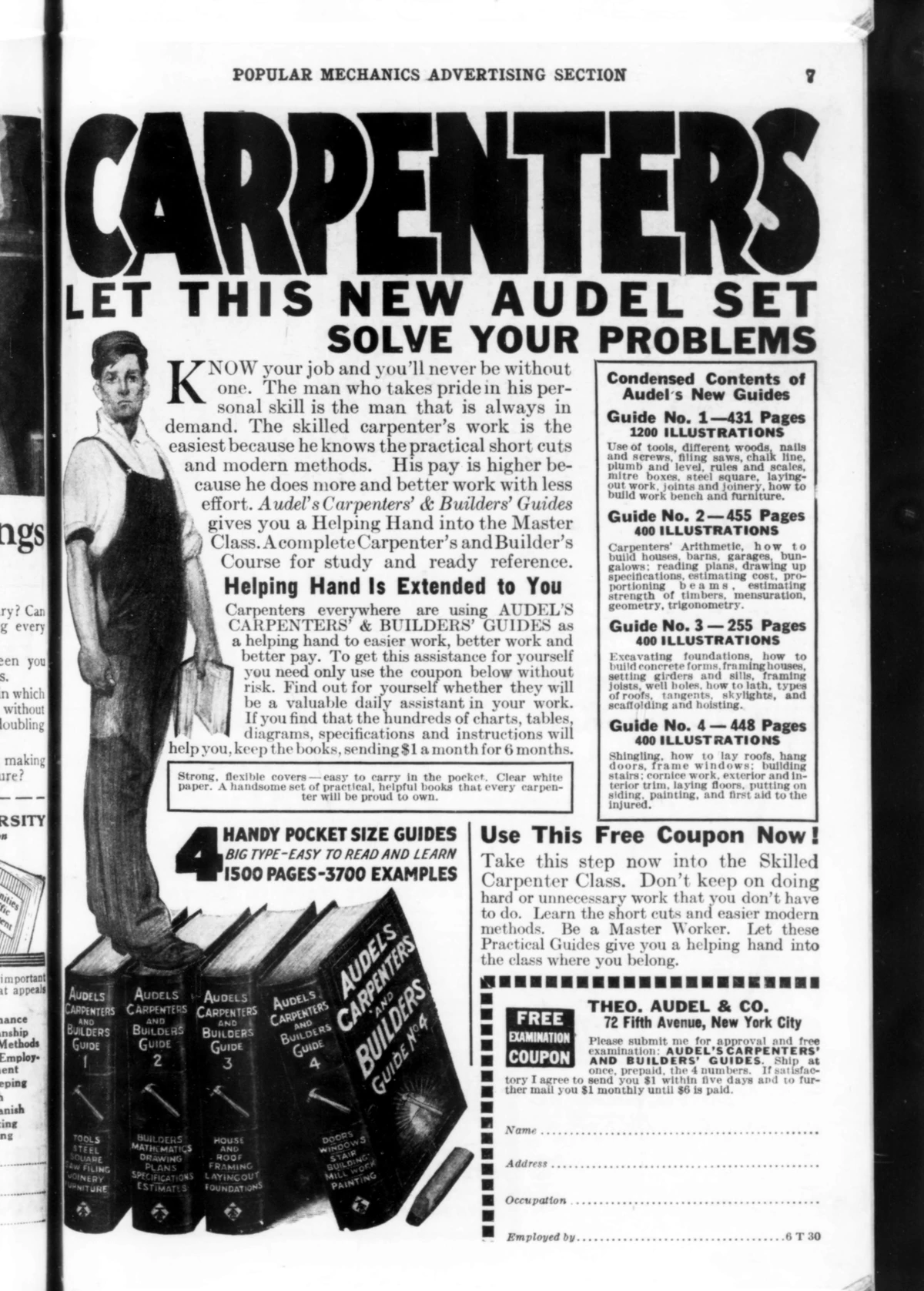
Theo. Audel & Co.
June 1925. Popular Mechanics, volume 43, number 6. Archive leaf 180. Printed advertising page 7. Independently matched in the June 1925 Google Books issue.
Visible choice. The headline names the trade. The 4 books and contents list give the reader specific material to inspect. The coupon makes the next action visible.
Briefing question. Name one audience job, show what the customer receives and give the next action a clear place in the frame.
Claim boundary. The career and pay promises are advertiser copy, not verified outcomes. The coupon code is not used as a publication date.
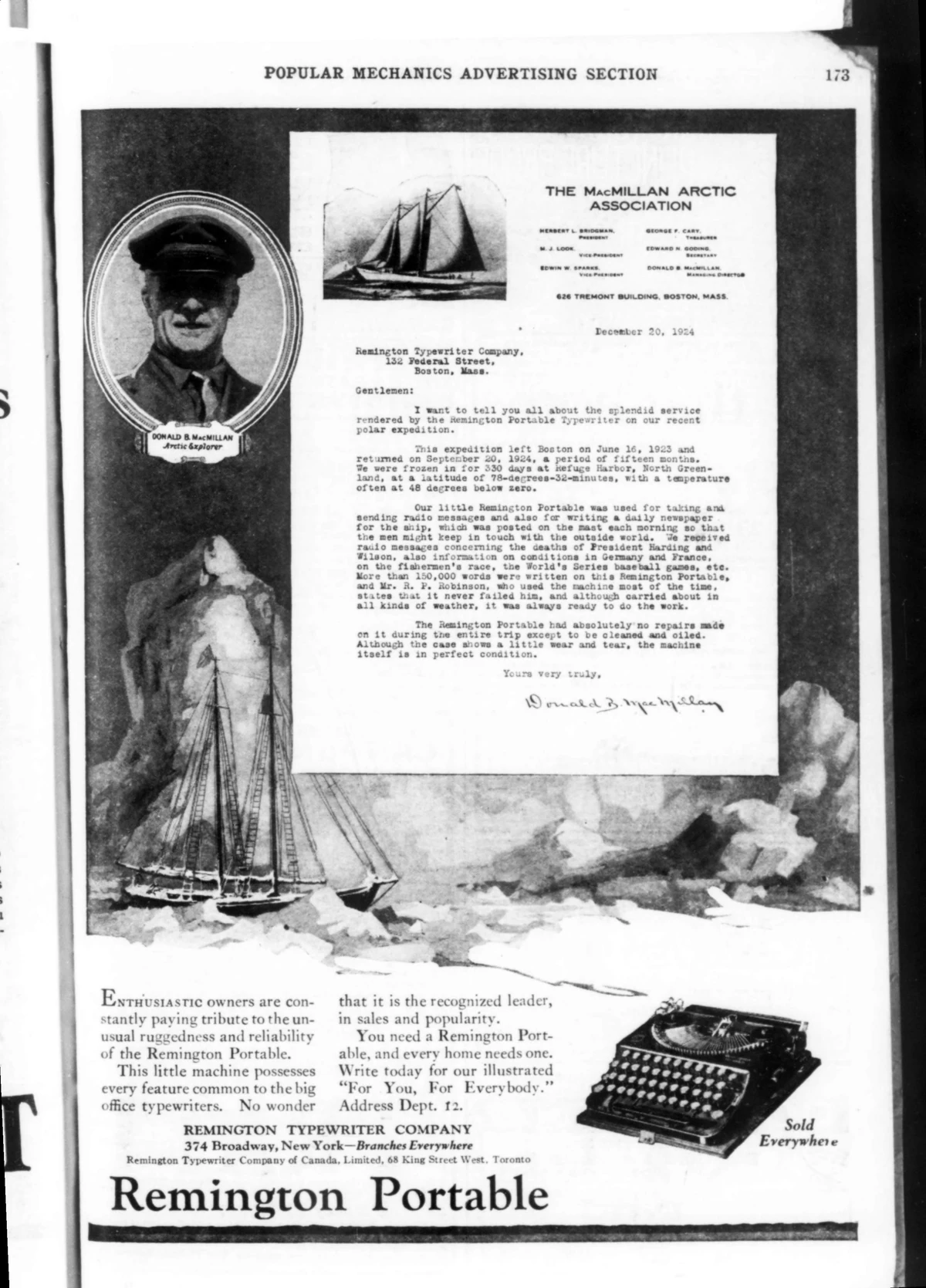
Remington
June 1925. Popular Mechanics, volume 43, number 6. Archive leaf 296. Printed advertising page 173. The reproduced letter is separately dated December 20, 1924.
Visible choice. A named person, a specific setting and a reproduced letter carry the testimonial. The typewriter remains visible beside that account.
Briefing question. If you use a real testimonial, show who is speaking, the product and the situation together. Get their permission and keep the account true to what they experienced.
Claim boundary. The letter is an advertiser-presented account. Its reliability claims and the expedition story are not independently established by this page.
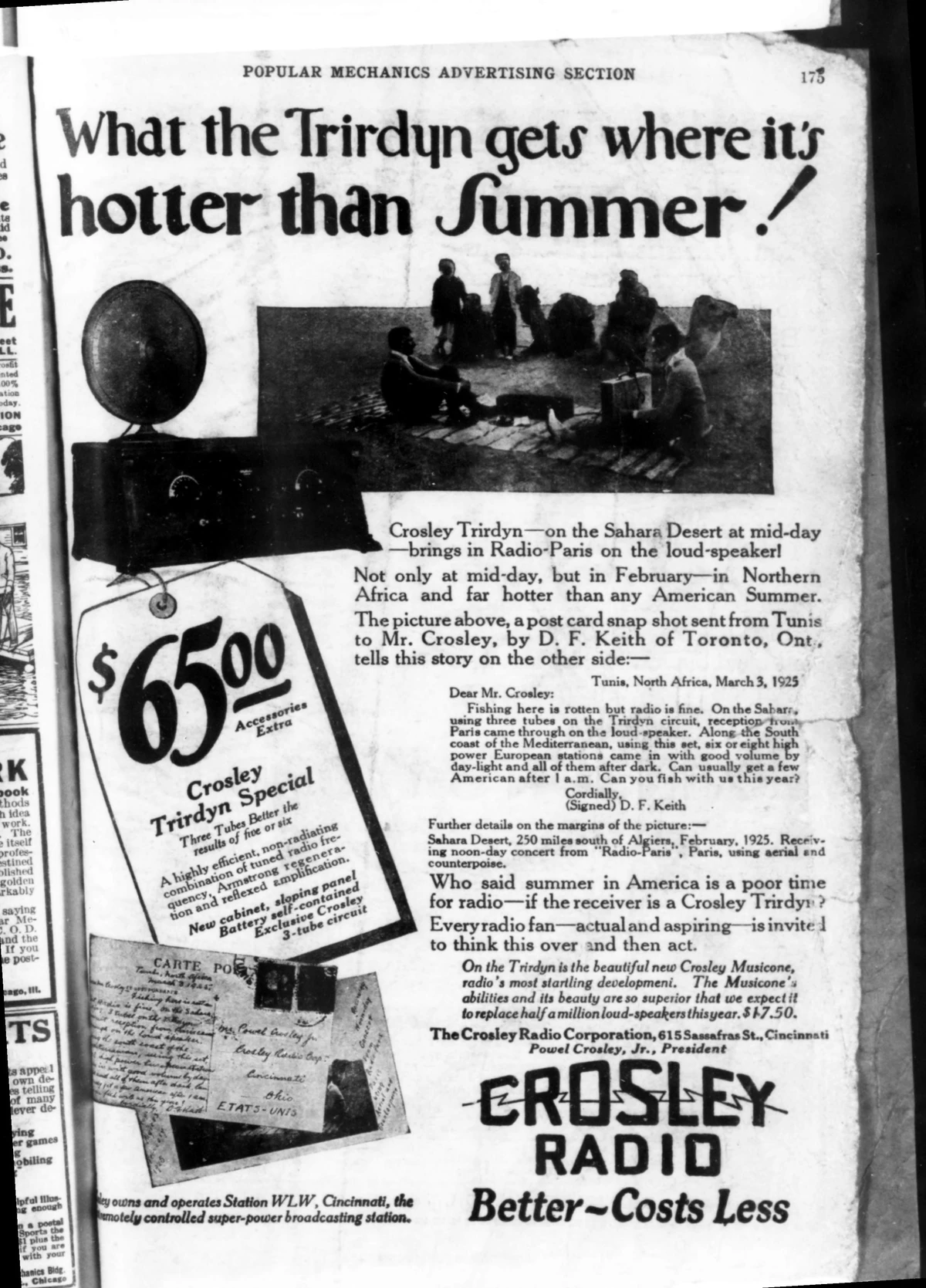
Crosley
June 1925. Popular Mechanics, volume 43, number 6. Archive leaf 298. Printed advertising page 175. The quoted correspondence is dated March 3, 1925.
Visible choice. The photograph puts the product in an unusual use scene. A price tag and customer correspondence connect the scene to the offer.
Briefing question. Show a meaningful use condition for your own product, then decide which product detail and offer the viewer needs next.
Claim boundary. The reception and temperature statements are historical ad claims. The printed price is historical, not a current offer.
1930s advertisements
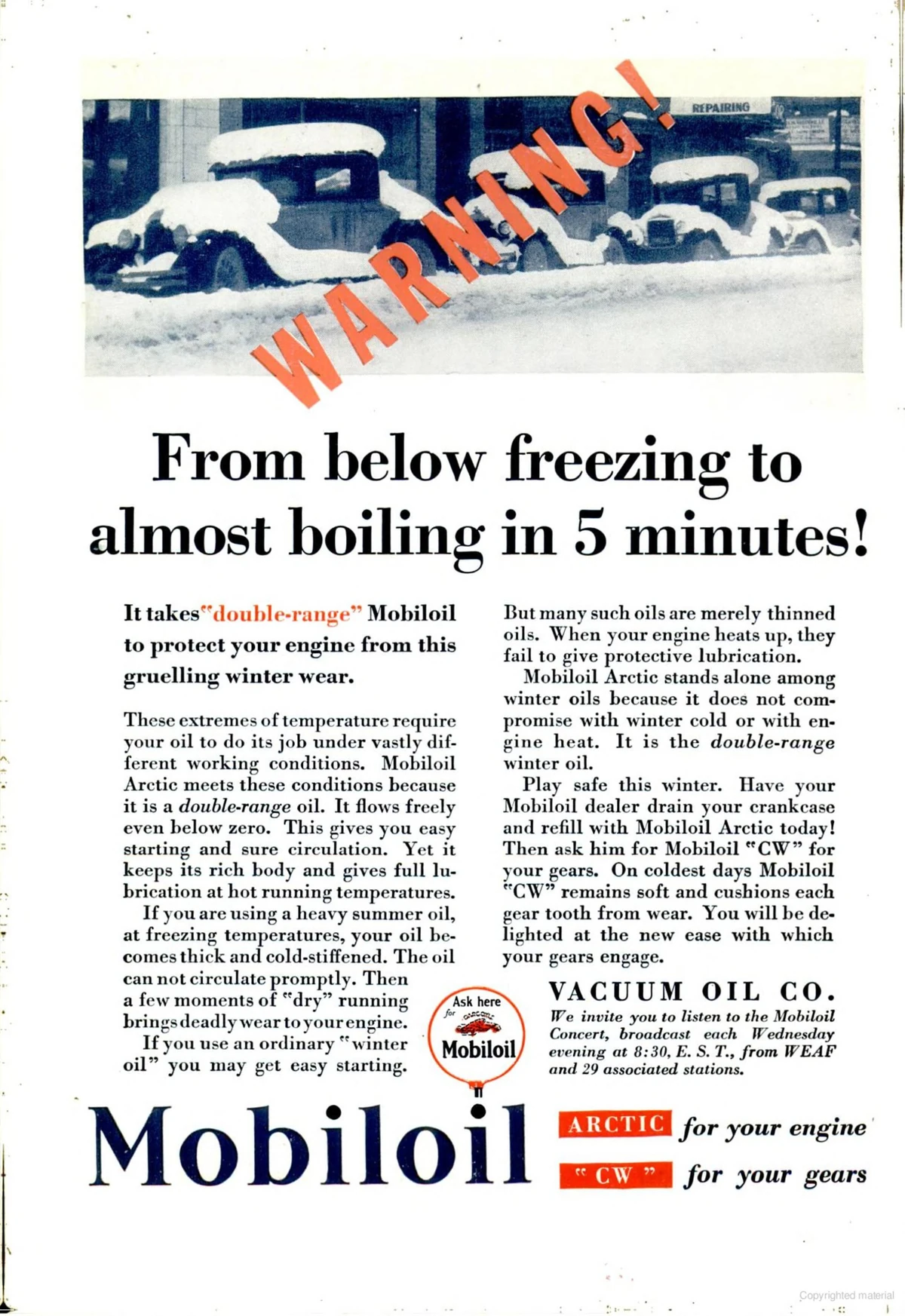
Mobiloil
December 1930. Popular Mechanics, volume 54, number 6. Archive leaf 1, opening advertising page. Issue date and Chicago publisher visible in leaf 4.
Visible choice. The snowy scene establishes the condition before the headline introduces the product problem. The product name is repeated in the body and closing lockup.
Briefing question. Let a visible situation explain the problem. Keep the claim separate until your own product evidence supports it.
Claim boundary. The temperature, protection and superiority statements are the advertiser’s claims. They are not engineering findings or modern performance evidence.
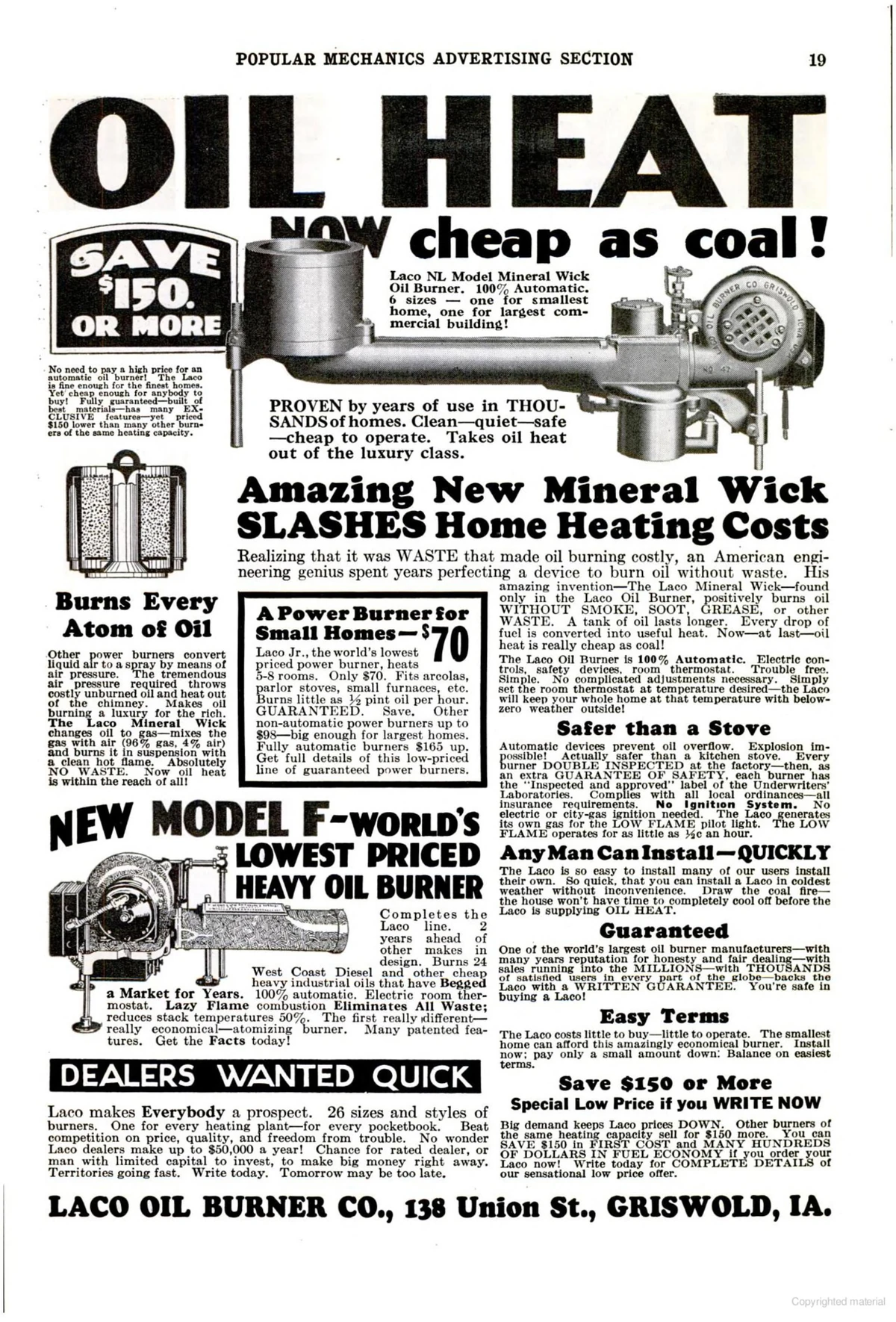
Laco
December 1930. Popular Mechanics, volume 54, number 6. Archive leaf 20. Printed advertising page 19. Issue date and Chicago publisher visible in leaf 4.
Visible choice. The main product image, cutaway and smaller models support different parts of the explanation. Price boxes and inquiry copy give the reader separate decision cues.
Briefing question. Give each product detail one job. Decide which evidence belongs in the main view and which needs a close-up or a later card.
Claim boundary. Savings, safety, technical and lowest-price statements are historical ad copy. This is a layout observation, not validation of those statements.
What transfers into a current production brief?
Take 1 useful choice from the layout. Audel names the reader’s trade. Remington shows the speaker beside the product. Crosley connects the use scene to the offer. Mobiloil starts with the weather, while Laco uses a main view and close details to explain different things. You can try those approaches with your own product. Any new claim still needs current evidence, and the old coupon doesn’t tell us how many people bought.
An original then-and-now assignment
For our pouch, take 1 idea from Remington: show the product beside the situation it’s used in. We’ll use our own packing scene. We aren’t borrowing the explorer story, presenting a real testimonial or showing a manufactured product.
- Audience situation
- Leaving for the day with cable, bottle and comb.
- Opening
- Show the pouch opening and the planned contents entering their compartments.
- Product detail
- Keep the same arrangement visible in the closing frame.
- Evidence needed
- Producer verifies the physical product, packing behavior and owned filming assets before a shoot.
- Test question
- Compare a use-scene opening with a product-detail opening. Ask whether the viewer can explain the organizing task.
- Approval boundary
- Concept plan only. No invented customer account, time saving, durability or performance promise.
Record the source before adapting the idea
Start with the blank worksheet, or read the filled-in example to see how to use it. You can copy either one.
Dates, reproduction and review limits
Sources checked October 14, 2026. The New-York Tribune date is visible in the Kelvinator scan. Popular Mechanics mastheads identify June 1925 and December 1930, the Chicago publisher and the respective copyright years. The Audel association is also corroborated by the June 1925 Google Books issue.
These dated US print publications have a qualified US public-domain basis under the copyright term and calendar-year rules. That is not a CC0 license or a worldwide rights statement. Faithful reduced scan copies preserve the original framing and markings. No source film or invented animation is presented.
The archive has missing pages in the 1925 issue. Exact leaves and printed page numbers are listed instead of assuming one numbering offset. A coupon code is left uninterpreted. A damaged AT&T page and a cropped Racine image were excluded. This is a selected 6-example reference, not a complete history or market sample.