Jewelry ad examples: make the small details readable
A close-up shows the detail. A shot of someone wearing it helps with size and styling. These examples give you a few ways to show the piece.
Real ads, with the observations beside them
Reviewed references: whole images and 6-second silent video snippets.
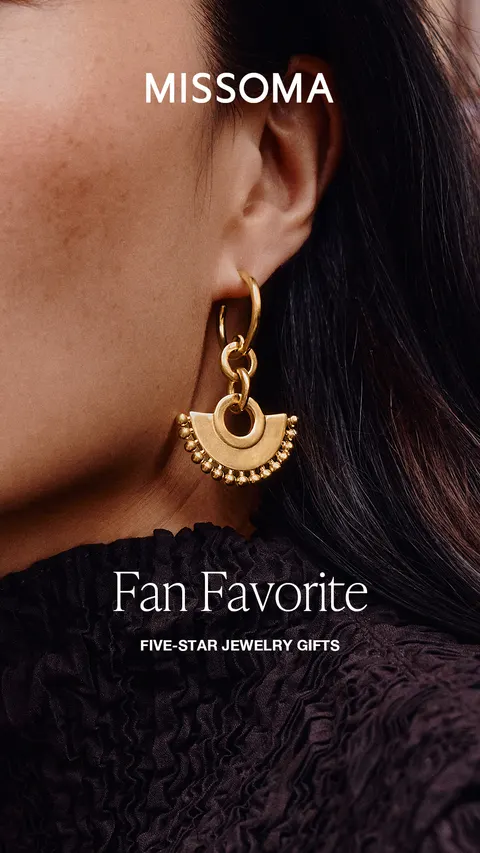
A worn earring beside a face
Missoma shows the earring beside a face so you can see how it looks when worn. The Fan Favorite headline sits below the image.
What to look for: How does the wearing view help a viewer relate the piece to a face?
Try this: Include a worn shot to give people a sense of scale. Use your own product measurements and material details in the copy.
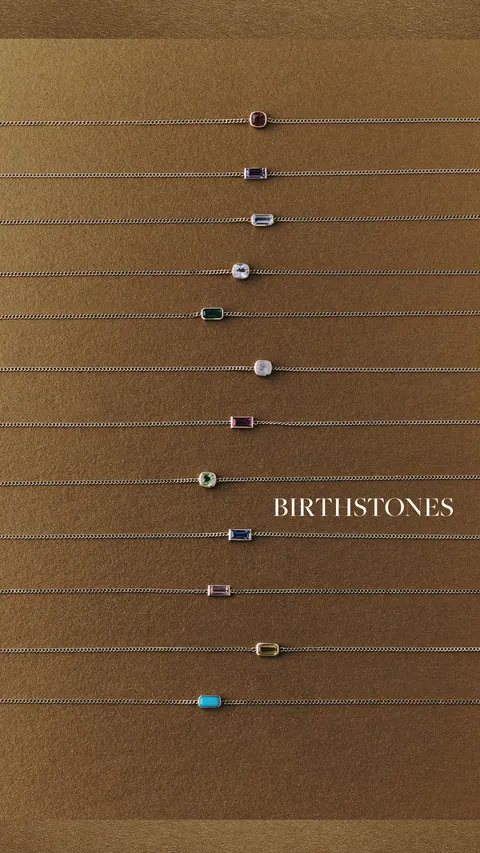
A lineup organized around selection
Gorjana lines up the necklaces so people can compare the birthstone options in one image.
What to look for: Can a viewer compare the options without losing sight of the jewelry itself?
Try this: A lineup makes the range part of the message. Decide how your own options will be identified and shown consistently.
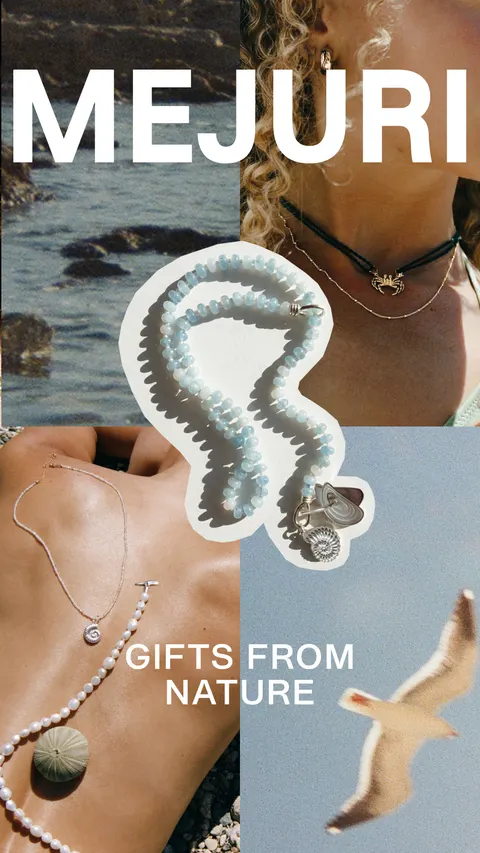
Jewelry within a styling collage
Mejuri combines jewelry cutouts, worn pieces and outdoor imagery in one collage, with a large brand name above and a nature-themed gifting message below.
What to look for: Which part carries the product information, and which part creates the setting?
Try this: Give the product and the surrounding imagery distinct jobs. Add a closer product reference when the collage leaves a detail unclear.
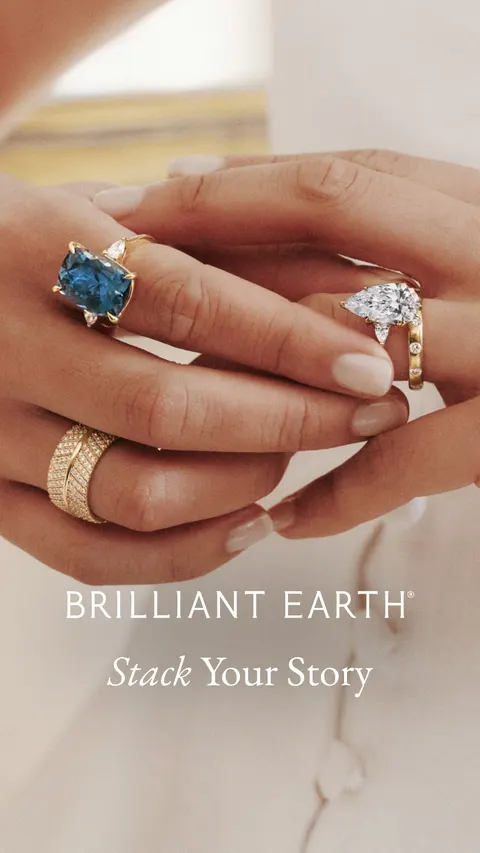
Layered rings on a hand
Brilliant Earth shows several rings on a hand. The Stack Your Story line connects the wearing view with layering.
What to look for: Which product relationships become clearer when the rings are worn together?
Try this: Show the rings together if stacking is the idea. Choose a hand pose that keeps each piece visible, and confirm the materials before writing the copy.
With jewelry, a close-up and a worn shot help people see different things. Compare these 4 ads for shape, scale, styling and choice, then decide which views your own piece needs.
Choose the view your jewellery ad needs
Jewelry ads and jewellery adverts share the same research task here. Compare an isolated silhouette with a worn view, a selection view and a collage. Each can make a different relationship visible. None of them verifies a material, size or styling claim for your own piece.
- Use an isolated view when the outline is the question. Use a worn view when the relationship to a hand, ear or garment needs discussion. Record the actual distance and crop rather than calling the piece large or small without a scale check.
- For a selection or collage, decide what each view contributes. Repeated product views should not crowd out the detail the prospective buyer needs to see.
- Write the required views into your shot list and confirm scale, materials and product identity with your own product owner. Keep any headline or offer tied to verified facts.
What to look for in this collection
Decide what the viewer needs to see
What would someone want a closer look at: the shape, clasp or surface? Add a worn shot when they also need a sense of size.
Compare one piece with a selection
Show 1 piece when you want people to look closely. Use a lineup to compare options, or a collage to show styling. Check that the extra images still leave room to see the jewelry.
Tell the photographer what you need to see
Tell the photographer which detail each shot needs to show, along with the lighting and background. Check material descriptions against your own product information.
Turn the references into a decision
Write one observation, one hypothesis and one production choice. Keep the reference beside each note so your team can see how you got there.
Research your own collection in Barry
Starter opens 1 brand on the Infinity Board. Pro adds search by look, saved boards and sharing. The board is designed for a desktop browser. These examples and worksheets work on your phone too.
Continue with another research question
Clothing ad examples: outfit, detail, collage and quote
Compare clothing ad examples by outfit, fabric detail, collage and quote. See what each view shows before planning your own shoot.
Testimonial ad examples: compare the quote and the product
See how quote-led ads balance a statement and the product. Compare the layouts, check who the quote comes from and plan your own testimonial ad.
Planning notes: Plan detail, scale and selection separately
Plan detail, scale and selection separately
These 4 contemporary references are a selected product-view study, not a jewelry campaign history. Keep unverified dimensions and materials out of the brief.
- Object detail
- Show our actual clasp or surface. Verify material separately from appearance.
- Wearing scale
- Include the wearing relationship and record our verified dimensions.
- Selection
- Use a lineup when the choice is the message. Preserve enough space to inspect each item.