Ad formats: choose what the product needs to show
Choose the format around your idea. A still can explain a message at a glance, while video or a carousel gives you room to show more.
Separate format from placement
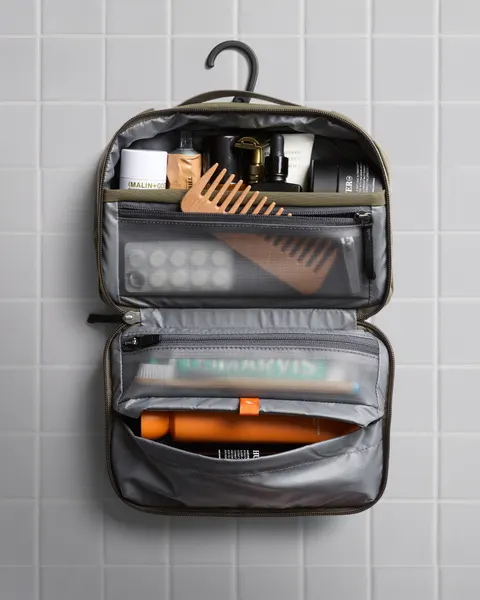
An opened product makes its arrangement visible
Bellroy shows an open hanging toiletry bag with contents in separate compartments. The whole static image allows inspection of the layout.
What to look for: Which part of your product becomes understandable when opened?
Try this: Ask for an open layout and a specific detail view. Verify fit with your actual sample.
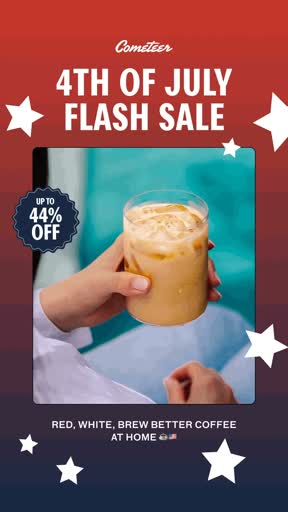
Keep the offer while changing the product view
This complete retained 2.5-second silent loop has 5 frames: one held glass, preparation beside boxes, the same photograph with changed stars, 2 glasses, then a person holding a drink. The sale headline and discount badge persist. The year and offer validity are unrecorded.
What to look for: What changes in the photograph while the message stays fixed?
Try this: Separate product context from offer copy. Use your own approved offer and actual drink or food preparation.
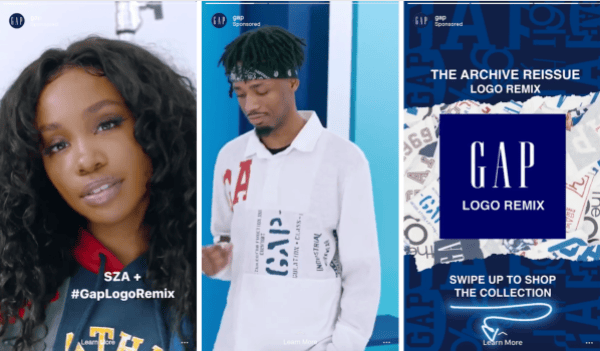
A portrait, a product and a shopping action
Meta’s 2018 illustration puts 3 panels side by side: SZA with Logo Remix text, someone wearing a Gap shirt and a closing panel with shopping copy. We can follow that message order, but this image doesn’t show the original timing.
What to look for: What new information does each panel introduce?
Try this: Assign a separate job to the opening, product view and action. Keep your own message and destination consistent.
Compare image, video and historical Story-carousel examples, then choose the format for what you need to show: a product detail, an action or an ordered set of cards.
Outdoor ads need a placement-specific explanation
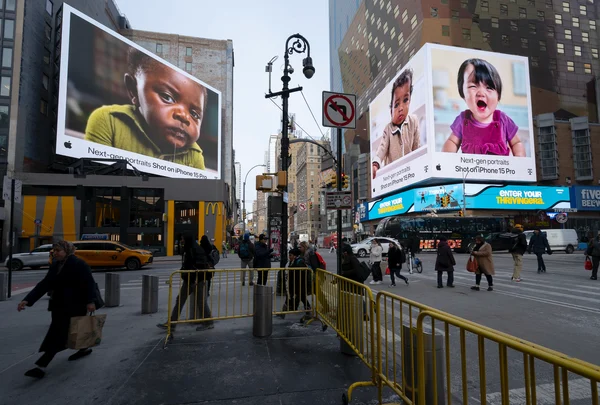
Outdoor advertising reaches people in physical settings outside the home. Out-of-home planning includes different environments such as billboards, street furniture, transit and place-based media. These are not interchangeable viewing conditions. A roadside board, a platform poster and a digital screen in a venue can offer different distance, dwell time, motion and production constraints.
OAAA’s 2025 entry for Apple’s Shot on iPhone: Babies is classified as billboards and credits TBWA\ Media Arts Lab, OMD and OMG. The photograph here shows large portraits above a street, with a short product/camera line in the lower white area. The faces occupy most of each creative. That is an observed composition, not evidence of the media buy, audience response or sales.
A useful production question is what remains recognizable from the intended viewing position. One strong image and a short line may give the viewer a clearer task than shrinking a feed ad with dense copy onto a billboard. Treat that as a design hypothesis to check against the actual site and operator specification, not a universal word-count rule.
Brief: a local bag shop wants pedestrians to notice its open-pouch display. Brief a photograph of the actual compartments, one supported line about the layout, the shop identity and a simple wayfinding instruction verified against the location. Check the proof at an approximate viewing distance. Obtain the operator’s exact dimensions, safe areas, file requirements, display schedule and approval process before production.
A paid-social version can use a sequence to show retrieval and offer a clickable destination. An outdoor version must communicate in its physical context. Do not stretch the same file and call the adaptation complete. Agree measurement with the buyer; the presence of an outdoor ad in a source photograph does not establish incremental visits or purchases.
Separate format from placement
Image and video describe the creative medium. A carousel describes an ordered multi-card presentation. Stories is a placement that can show images or video. A portrait file is therefore not automatically a Story ad, and a collage is not automatically a carousel. The historical Gap source establishes its Stories-carousel context explicitly.
Use an image when the needed relationship is visible
Bellroy shows the compartments in 1 image. You can see where the contents sit without watching them being packed. For your own product, check whether 1 frame can explain the important detail and leave room for the words. Use another shot or format when the action needs to be seen.
Use video when the action changes the explanation
Cometeer changes the product photos while the offer stays in place. ILIA uses video to show application before naming the product at the end. Decide what movement adds to your explanation: a step, a different view or another part of the message.
Use card order when evidence builds across views
The Gap illustration shows collection/person, product and shopping action in displayed order. Original timed cards are not supplied by that illustration. For your own carousel, define what every card adds, what repeats and what the final action opens. Review a complete authentic order before interpreting a sourced multi-card example.
Choose a format with a production question
The pouch can be an open-layout image, a continuous packing video or a 3-card explanation. Choose the format around what someone needs to understand: where the items go, how to reach them or what each card adds. Keep product facts fixed across the comparison. The worksheet records the required proof, production inputs and review rather than ranking formats as universally better.
Use the worksheet
The completed example separates what we can see in the ads from our own plan. Use the blank worksheet for your product details, supporting sources and the people reviewing the work.
Start with the blank worksheet, or read the filled-in example to see how to use it. You can copy either one.